Process
Restoration is a sequence of decisions.
What to preserve. What to replace. What to research. What to remake. What to leave exactly as it is.
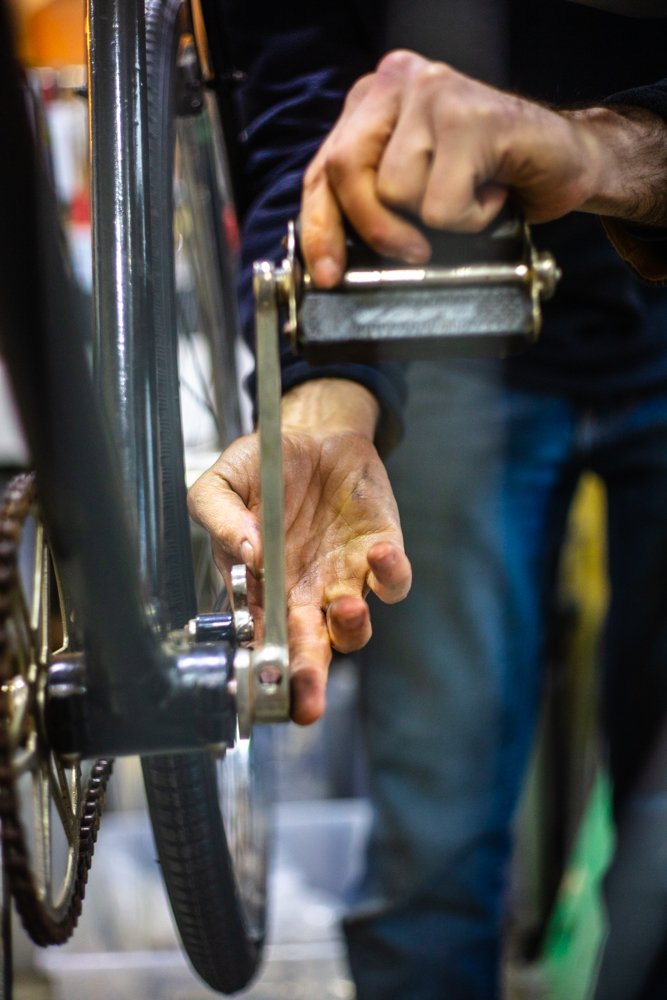
At Bells Bespoke, every project begins with the bicycle itself. Its age, condition, construction, finish, components and history all shape the route we take.
Our work is not simply to make an old bicycle look new. It is to understand what the bicycle is, what it should become, and how to get it there with precision.
01 / Assessment
Every restoration begins with a detailed inspection.
We look at the frame, paint, chrome, components, wheels, bearings and overall condition. We also consider originality: what belongs to the bicycle, what has been changed, and what may need further research.
This first stage determines the most appropriate route for the project.
02 / Research & Specification
Once the bicycle has been assessed, we define the specification.
This may involve identifying the correct finish, decal style, component group, wheel type, saddle, brakes or other period details.
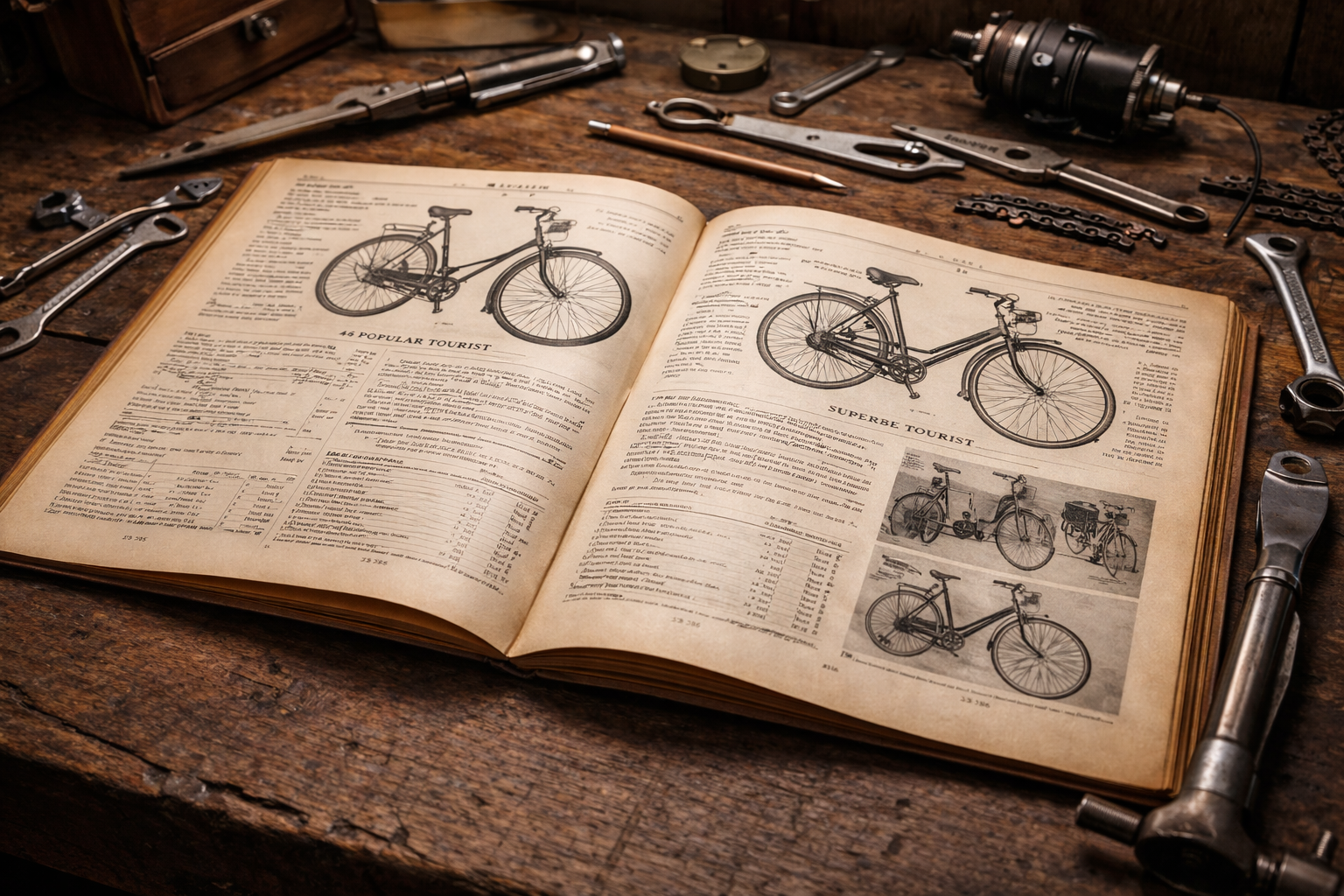
Where possible, we work from catalogues, original examples, period references and surviving evidence on the bicycle itself.
03 / Documentation & Disassembly
Before work begins, the bicycle is documented and carefully dismantled.
Original parts are recorded, assessed and separated for cleaning, restoration, replacement or further investigation.
This stage allows us to understand how the bicycle was built, how it has changed, and which details need to be protected.
04 / Frame & Finish
The frame is the foundation of the restoration.
Depending on the agreed approach, the original finish may be cleaned, stabilised and protected, or the frame may be prepared for repainting.
Where a full refinish is required, we work towards the correct colour, decals, lining and surface quality for the period and type of bicycle.
05 / Chrome & Metalwork
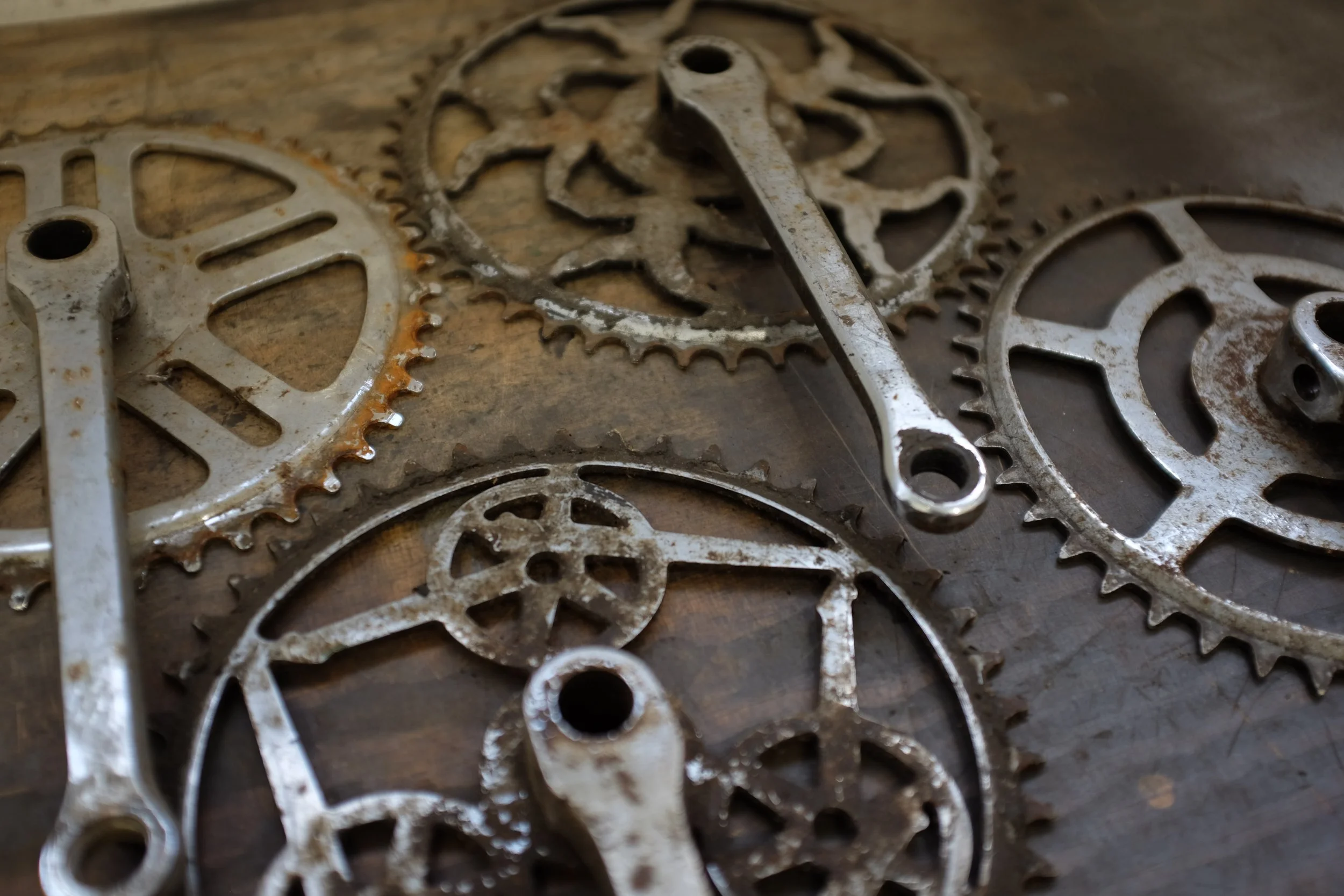
Chrome, nickel, alloy and steel parts are assessed individually.
Some components can be cleaned and polished. Others require replating or replacement.
The aim is not excessive shine. The aim is the right finish for the bicycle.
06 / Components
Where original components can be retained, we retain them.
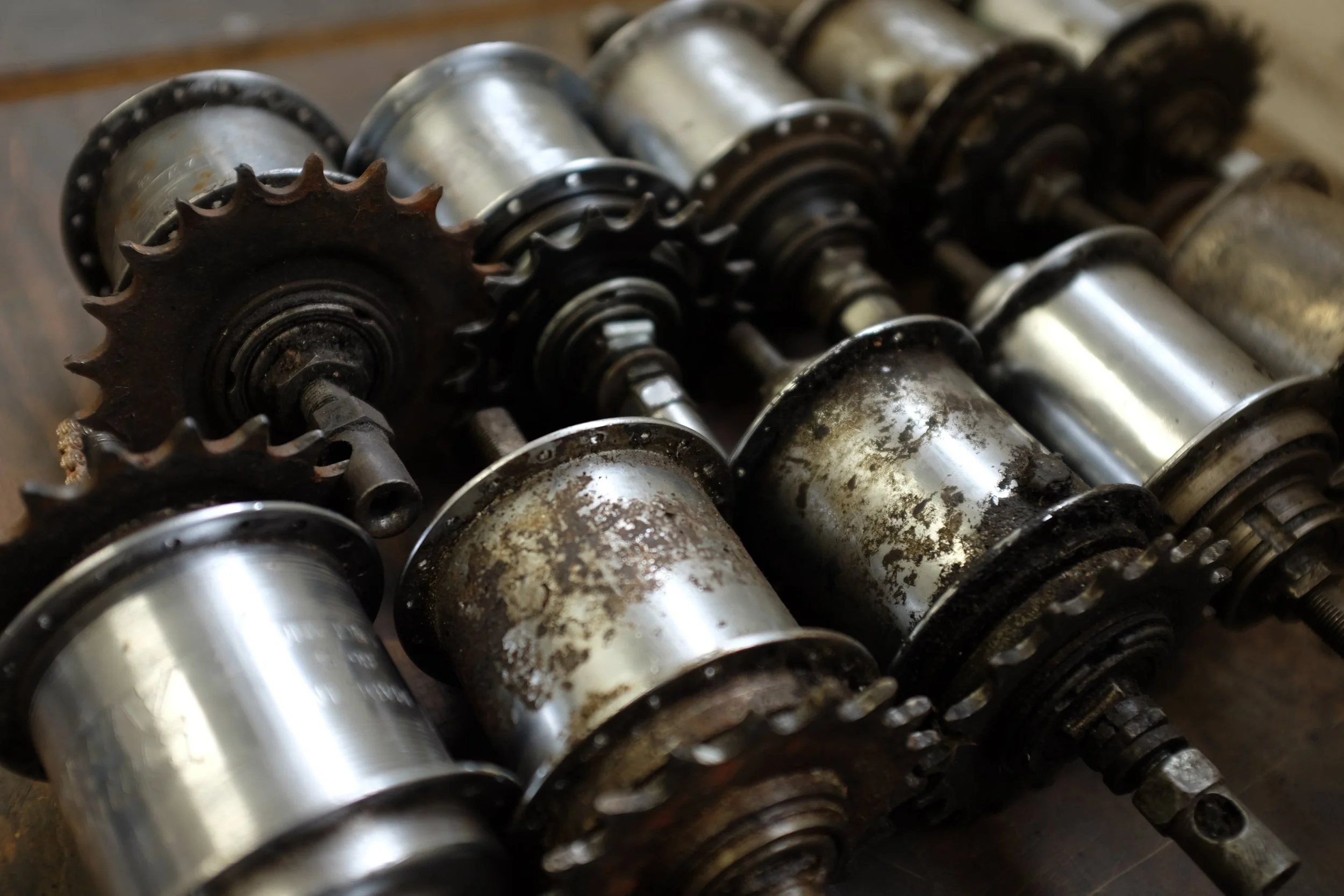
Hubs, headsets, bottom brackets, brakes, derailleurs, chainsets and other parts are stripped, cleaned, serviced and rebuilt wherever practical.
Missing, incorrect or unusable parts are sourced with attention to period, proportion and compatibility.
07 / Wheels & Running Gear
Wheels are inspected for condition, strength and suitability.
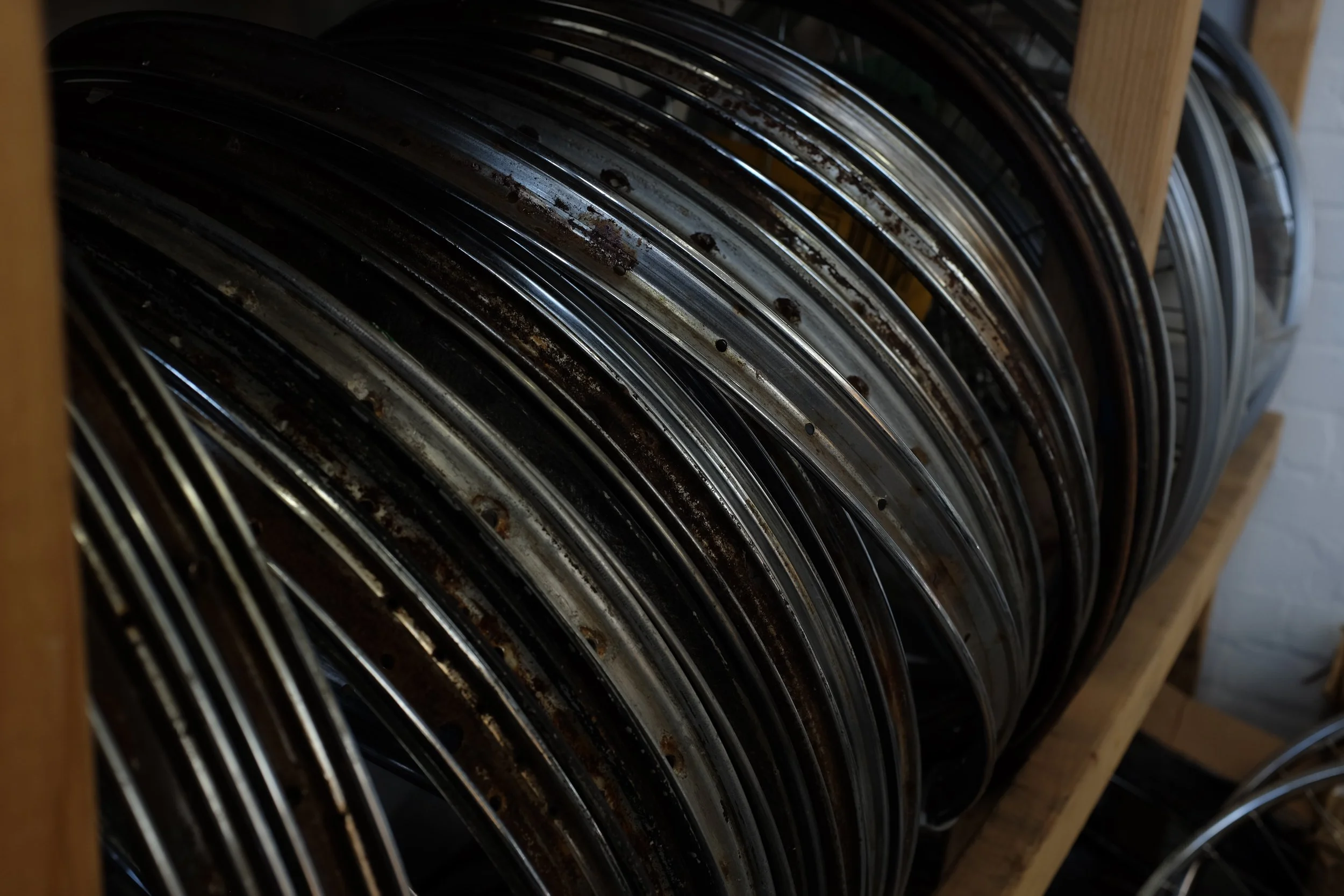
Where possible, original wheels are serviced, tensioned and retained. Where required, we rebuild using appropriate rims, hubs, spokes and tyres.
Worn parts are replaced where needed to make the bicycle reliable and safe to ride.
08 / Assembly & Detail
Final assembly brings the restoration together.
Bars, tape, saddle, cables, guards, racks, lights, decals and fittings all need to sit correctly within the overall specification.
A good restoration should feel resolved. Nothing should jar.
Timescales
Most restorations take between 6 and 16 weeks, depending on the level of work involved.
Projects requiring paint, chrome, specialist parts, extensive research or unusual construction can take longer. We will advise on likely timing before work begins.
The Right Approach
There is no single correct way to restore every bicycle.
Some deserve a full, period-correct rebuild. Some should be preserved with their original finish intact. Others need a practical balance between historical accuracy, reliability and budget.
Our role is to guide that process with care, knowledge and judgement.
Start Your Restoration
Tell us what you have, what you’d like to achieve, and we’ll advise on the most appropriate route